


Hongkong, Komite.id – 15 October 2026 – The Autumn edition of the Hong Kong Electronics Fair 2026, organized by the Hong Kong Trade Development Council (HKTDC), highlights an emerging or frontier technology not previously featured at electronics or IT exhibitions: quantum computing.
Adjacent to this is the “Future Industries Zone,” which promotes five key frontier or emerging technology themes with the support of the Hong Kong Productivity Council (HKPC). The zone focuses on five core areas: Future Computing, Future Manufacturing, Future Marine & Quantum Technologies, Future Microelectronics, and Future Wellness.
Komite.ID visited the quantum computing booth within the “Future Electronics” section, where the HKPC collaborated with SpinQ, a Shenzhen-based company engaged in quantum computing research. SpinQ uses Superconducting Quantum Computing Solution technology.
Quantum Computing (QC) marks a fundamental shift in information processing, as Classical Bits (Zero & Ones) computing reach is physical limits on 2 nm, Qubit (Quantum Bit) utilize superposition and entanglement to manipulate exponential computational spaces. QC offers new pathways in cryptography breakthrough using PQC algorithm, material science, and AI by solving problems intractable for Classical Bit computing. QC does not replace GPU computing method but expands the boundaries of computability.
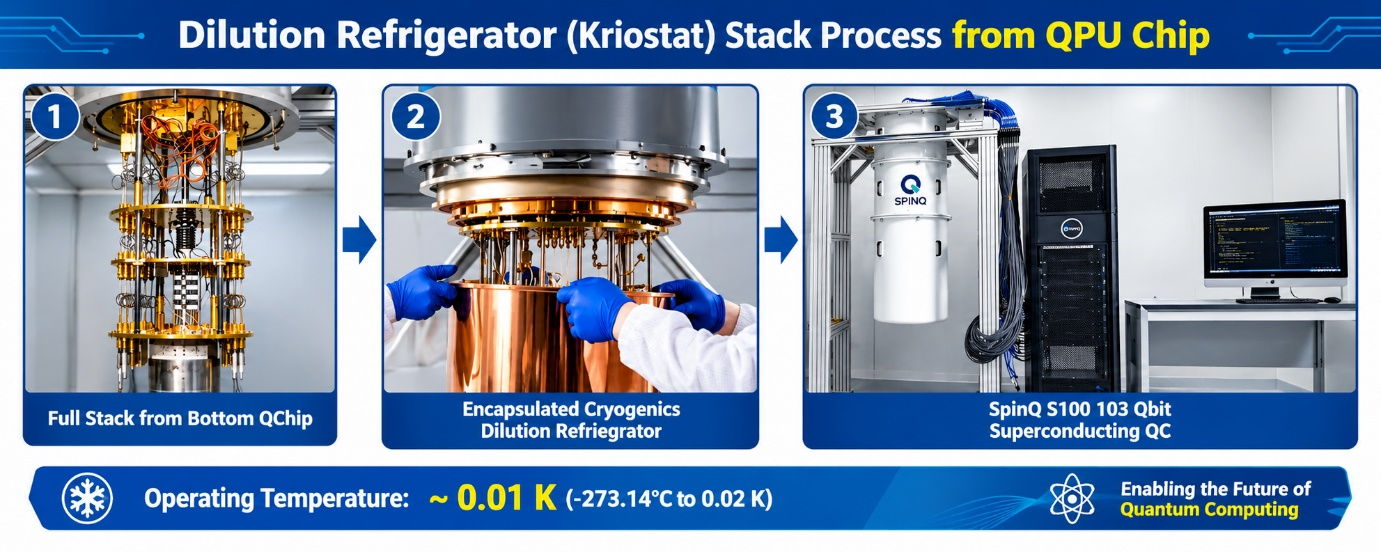
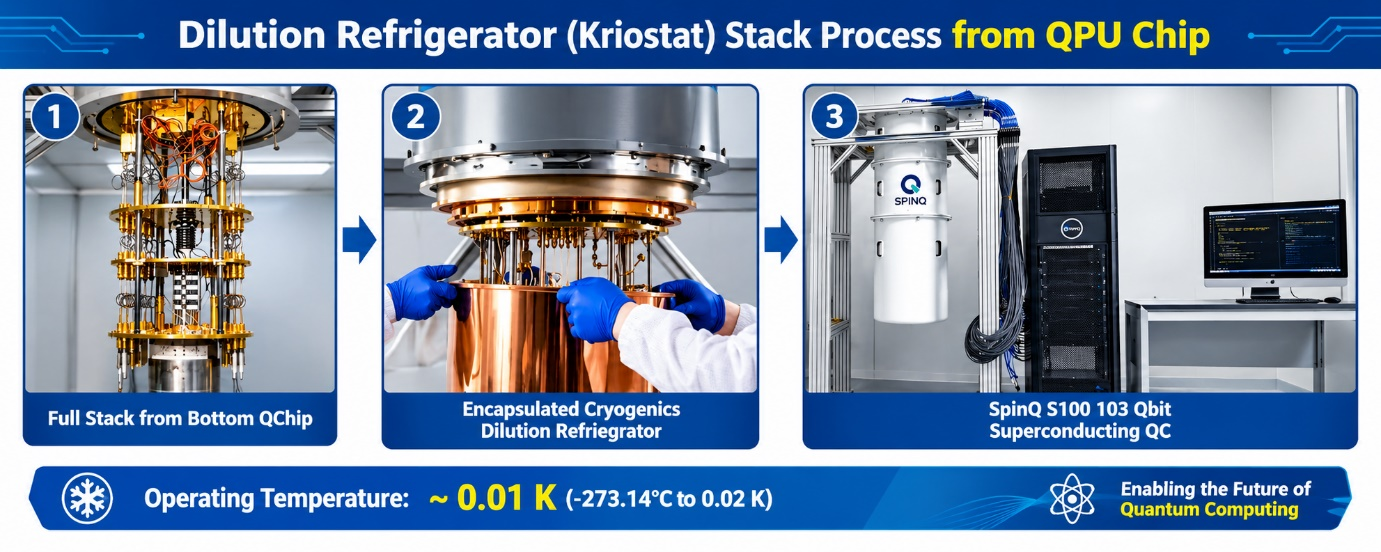
Superconducting QC is widely recognize as the most scalable Engineering path, utilizing zero resistance superconducting circuit and Josephson junction at cryogenic temperatures measured in Kelvin (below – 200C ) architecture allows for precise, designable qubit control. The collection motion of electrons form quantum states between 0 and 1, manipulated via microwave pulses. This approach benefit from mature fabrication processes and compatibility with existing nanometer semiconductor manufacturing.
Advancement in coherence and gate fidelity have transitioned superconducting systems from scientific theory to engineering reality and commercialization of QC involving integrating chip design and cryogenics architecture, shifting from realizing qubit to achieving quantum utility. Current research in QC physical hardware already at 103 qubit can run verifiable algorithm for calculating molecular structures, achieving performance of more than 13,000 times higher than the fastest classical supercomputer to date or the latest GPU cluster super computing.
Computing Out of Order Time Correlator algorithm (OTOC), the Fastest Super computers will takes 3.2 years to calculate, while Quantum Computing only takes 2.1 hours.
SpinQ dedicated to optimizing device fabrication, control algorithm and systems architecture aim at accelerating the industrialization of QC toward Q Day. SpinQ SQC S series features long qubit lifetimes, high fidelity, and support for quantum error correction and parametric gates, scalable up to 103 qubits with the SPINQ S100 and Single Qubit Gate fidelity 99.5% (Medium) and 99.9% (Max).
QUANTUM COMPUTING (QC) & PQC (POST QUANTUM CRYPTOGRAPHY)
As a member of the PQC Migration Task Force overseen by the BSSN (National Cyber and Crypto Agency) developments in both quantum computing (QC) and post-quantum cryptography (PQC) have become critical topics of discussion at the SpinQ booth during the 2026 Hong Kong Electronics Fair (HKEF). This article examines the progress of quantum computing not in the U.S. or China (Beijing), but in Hong Kong where the 2026 Hong Kong Electronics Fair (autumn edition) featured a quantum computing company, SpinQ, in collaboration with the Hong Kong Productivity Council (HKPC).
According to staff at SpinQ, their quantum computing (QC) development has reached 103 qubits; however, thousands of qubits would be required to execute Shor’s algorithm for cryptanalysis the process of breaking passwords or RSA encryption (such as that used in banking ATMs) via a brute-force attack, without needing to resort to social engineering to obtain the encryption key. This scenario becomes feasible once quantum computing matures, achieves stable error correction, and reaches a sufficient qubit count a milestone known as “Q-Day.” While some predict Q-Day will arrive between 2030 and 2035, others suggest it could begin as early as 2029. A major concern is the “Harvest Now, Decrypt Later” (HNDL) strategy, where attackers steal and store encrypted data today, intending to perform cryptanalysis once quantum computing technology is fully capable. Currently, companies like IBM and Google offer “Quantum Computing as a Service” (QCaaS), which can be utilized for both benign and malicious purposes.
BENCHMARKING SPINQ DENGAN IBM, GOOGLE QUANTUM, SUPERCOMPUTER
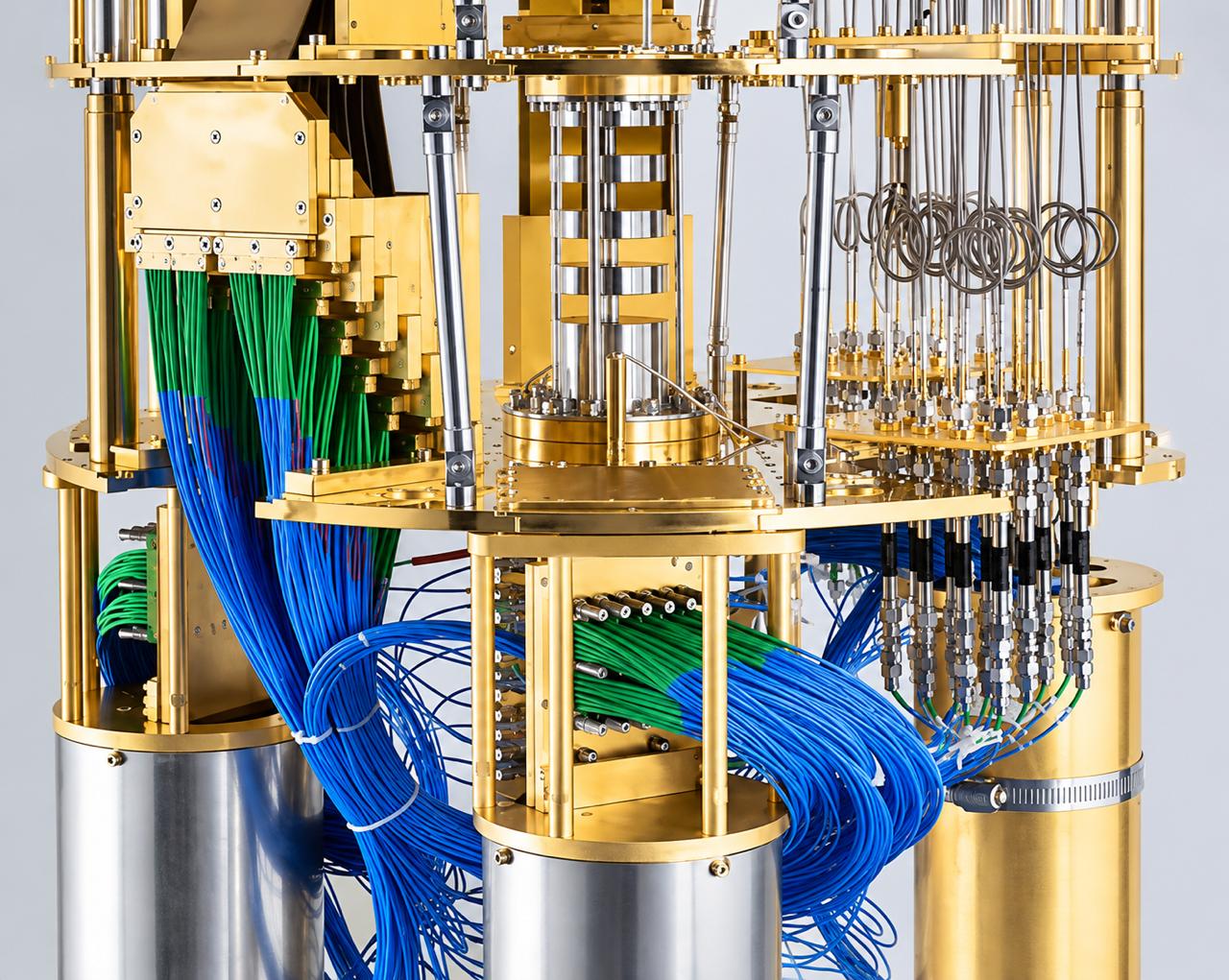
Through its Heron (133–156 qubits) and Nighthawk (120 qubits) QPUs (Quantum Processing Units), IBM focuses on the metrics of EPLG (Error Per Layered Gate) and MCPS (Circuit Layer Operations Per Second, or throughput). IBM employs a modular cryogenic infrastructure to assemble multiple QPU chips into a single integrated system.
Google Quantum AI
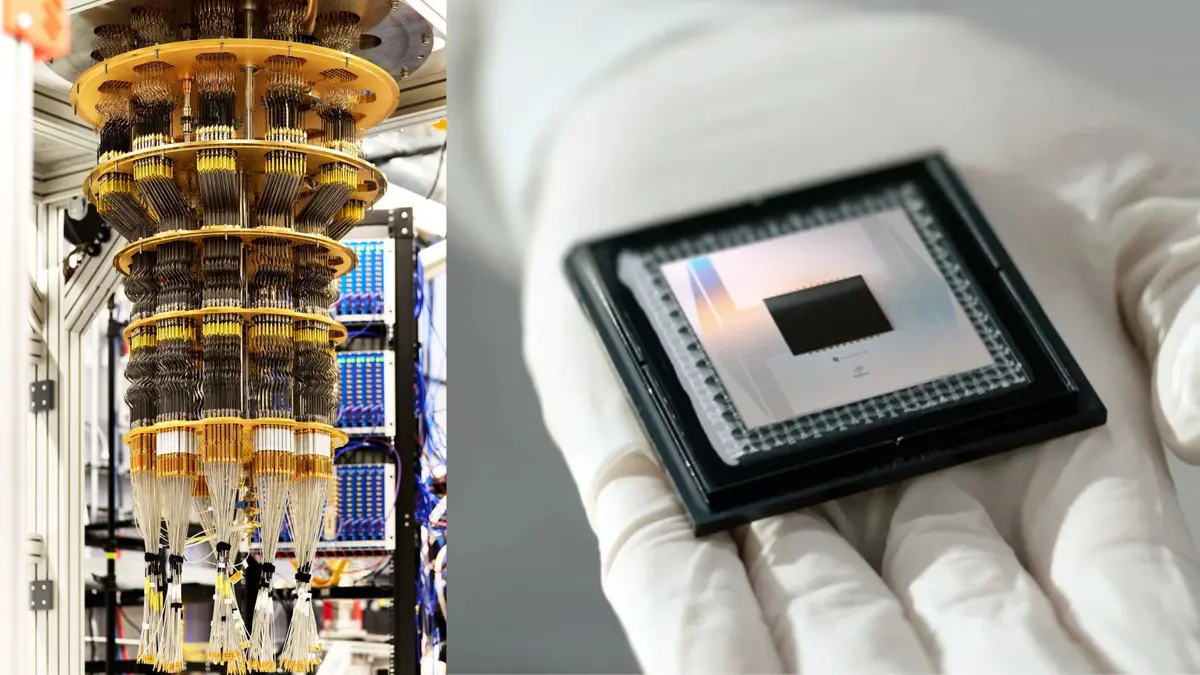
Utilizing the 105-qubit superconducting processor “Willow,” the system demonstrated performance on sampling tasks approximately 13,000 times faster than the world’s most powerful classical supercomputer.
China’s Supercomputers and the U.S.’s Frontier
According to the TOP500 rankings, the top positions are held by exascale-class supercomputers such as China’s systems or U.S.-based machines like Frontier and El Capitan which deliver performance ranging from multi-petaflops to thousands of petaflops (reaching the exaflop scale for AI and high-performance computing).
For general-purpose computing, classical supercomputers remain far superior, more stable, and more accurate, thanks to their mature error-correction systems. However, for tasks such as molecular simulation, complex optimization, cryptography, and random circuit sampling, a quantum computer with 100+ qubits can solve problems in mere seconds tasks that would take a classical supercomputer thousands of years to complete (demonstrating an exponential advantage).
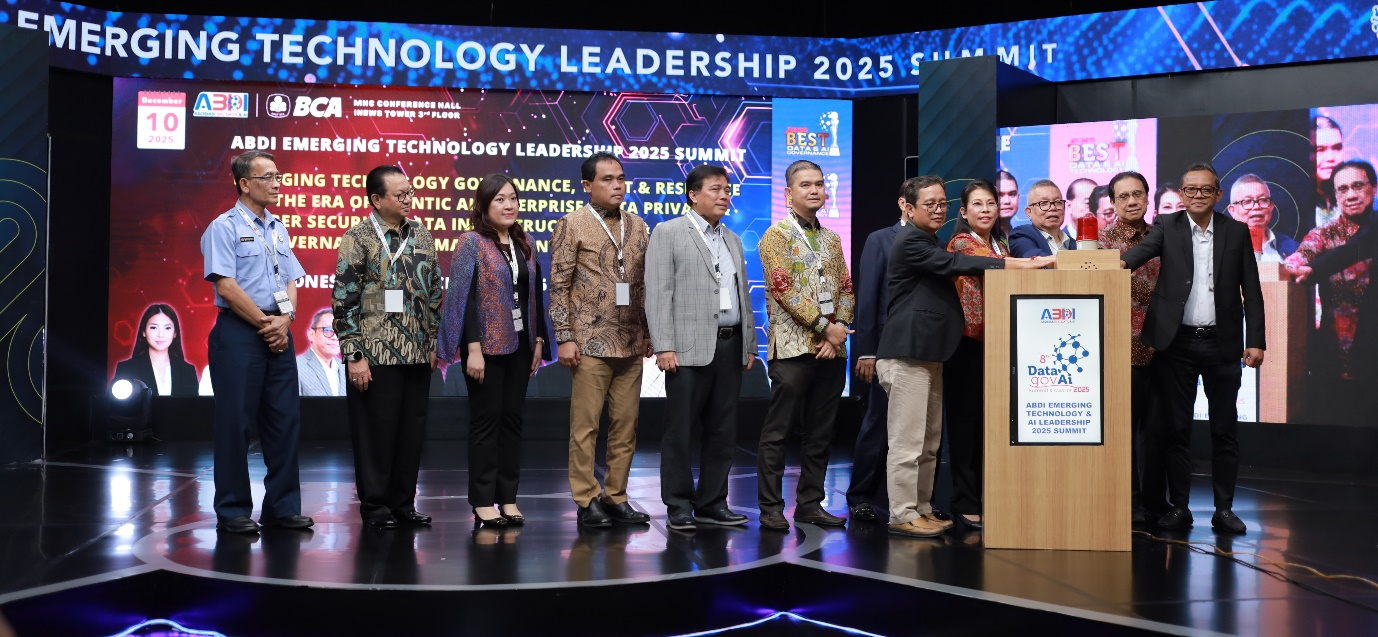
The DataGovAI 2026 Summit, Awards Ceremony, and Grand Book Launch will take place on November 18, 2026, from 12:00 to 16:30. The event will be held in a hybrid format; you are welcome to join online via Zoom. The in person (onsite) portion will be hosted at theMNC Conference Hall, iNews Tower, and is by invitation only please register to receive confirmation from ABDI.
Click here to register online: https://forms.gle/xFEJhLXoppWM9USb7 , or contact ABDI at sekretariat@abdi.id to request an invitation for the in person summit.