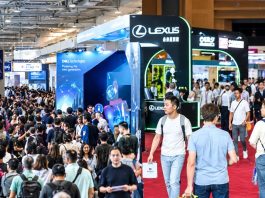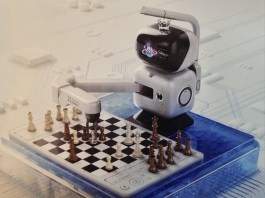
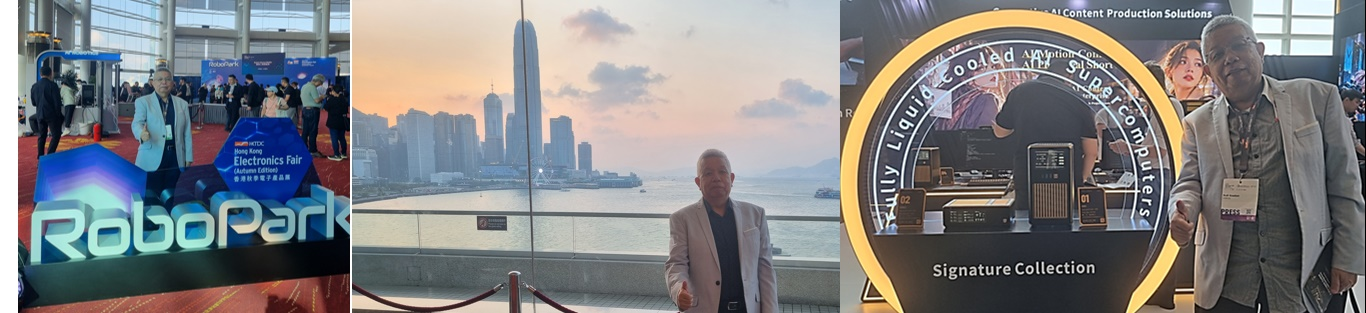
Hongkong, Komite.id – October 14, 2026 – The Autumn edition of the Hong Kong Electronics Fair 2026, organized by the Hong Kong Trade Development Council (HKTDC), is taking place over four days with an increased focus on AI robotics. This year’s “Robopark” features over 120 AI robotics companies—a larger and more mature lineup than those seen at the Spring 2026 or 2025 editions of the fair. The majority of these robotics firms hail from mainland China, including cities such as Shenzhen and Guangzhou in Guangdong Province, as well as Beijing.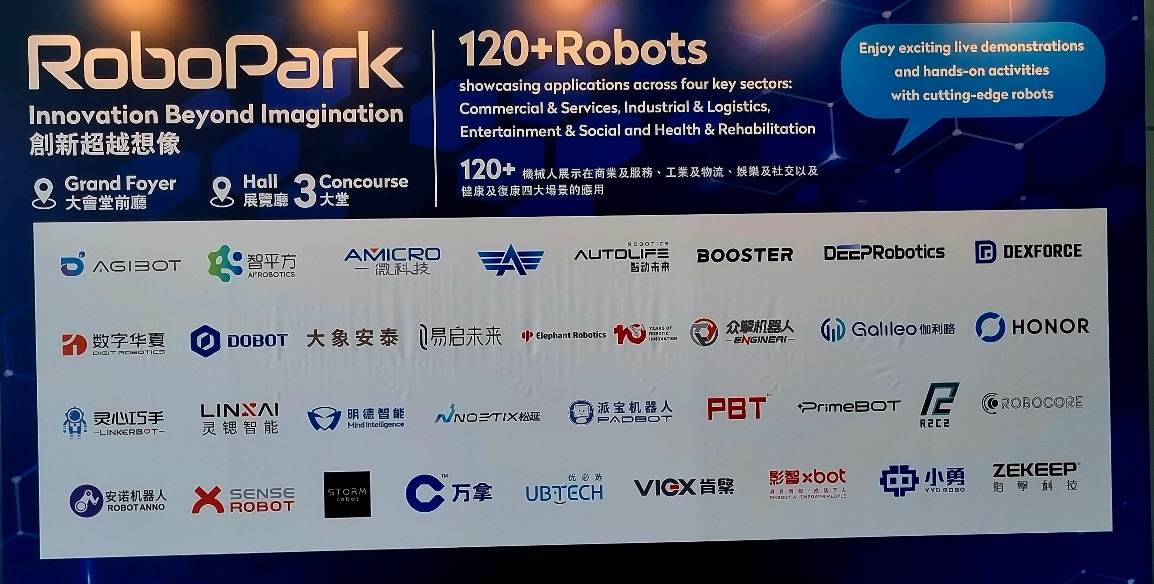
A key highlight is the expanded RoboPark, featuring over 120 AI robotics companies. It showcases not only the latest, increasingly mature AI robotics technologies but also their growing applications in daily life and across various industrial sectors. Last year, most of the robots demonstrated the capability to accept commands in human language, powered by LLMs and generative AI. This year’s RoboPark presents even more sophisticated AI robots—for instance, those capable of mimicking human or canine movements with high reliability and stability, functioning as AI agents and “physical AI.” According to the HKTDC—a core member of the Hong Kong government-led “Go Global Task Force”—the event includes a “Go Global Connect Zone.” This zone offers consulting services and practical support to help companies—particularly those from Mainland China—expand internationally via Hong Kong. This reinforces Hong Kong’s role as a platform for global expansion, leveraging its strengths as a “super-connector” and a significant “super value-adder.”
A wide array of robotic applications can be found, including robots that prepare coffee, make popcorn, or cook meals; robots designed for massage or assisting patients in hospitals; and robots used for patrolling and security. Among the AI robotics we encountered were:
Robots from YYD Robo (Shenzhen Xiaoyong 365 Technology Co., Ltd.): These focus on elderly care, health, and companionship—ranging from functional care robots to charming, dog-like robotic companions, with a variety of options available.
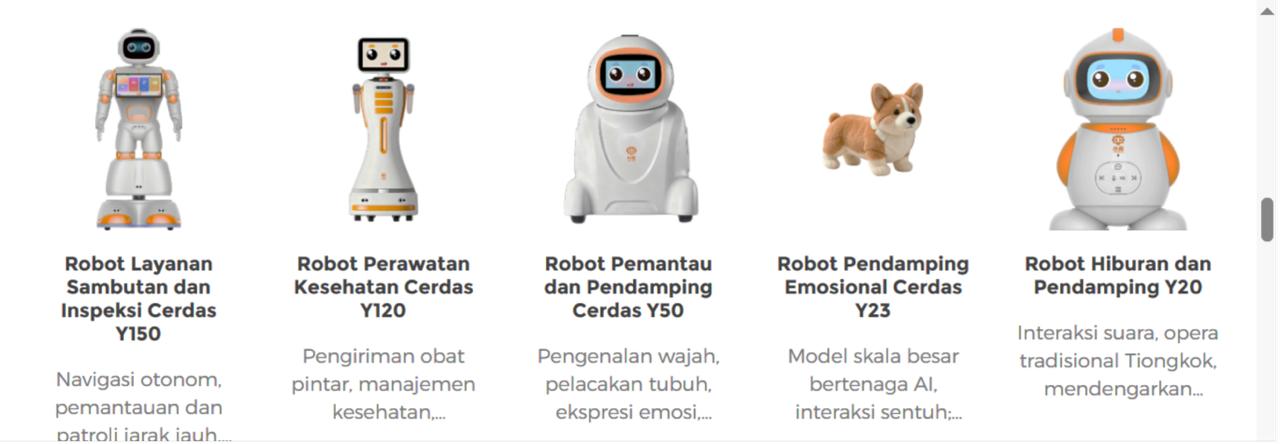
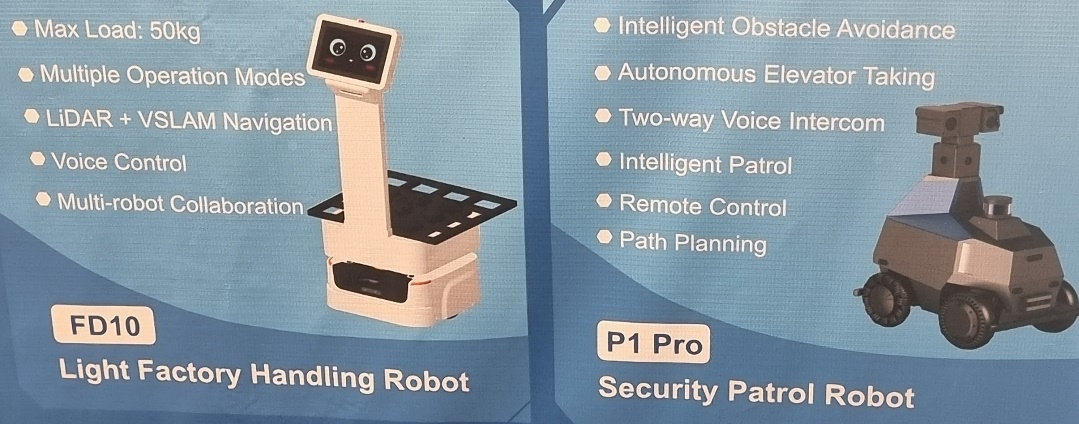
At the YYD Robo booth, various robots are on display, including the FD!0 Light Factory Handling Robot for logistics, a security patrol robot, and other application-specific robots.
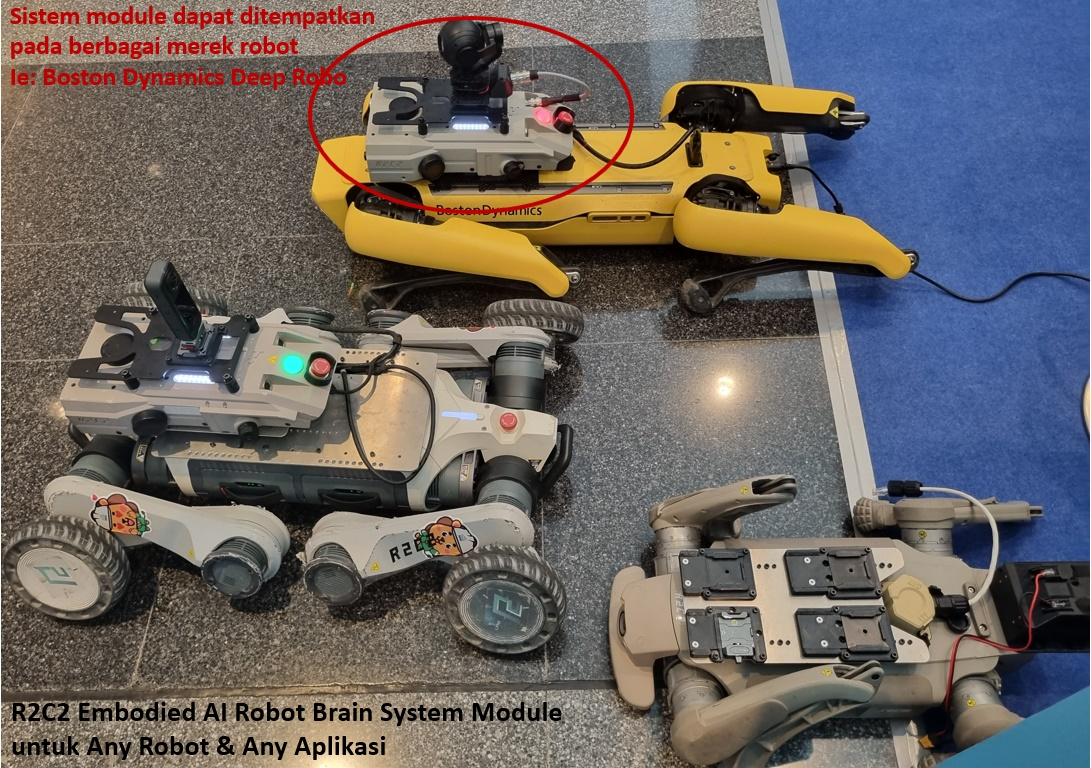
2. R2C2 Embodied AI Robot Brain (System Module): This module can be attached to robots from various brands—as shown in the examples below, including Boston Dynamics, Deep Robotics, and nearly any other existing robot brand. The module is programmable and can be utilized for a wide range of applications, such as patrolling hospitals, airports, power plants, and more.
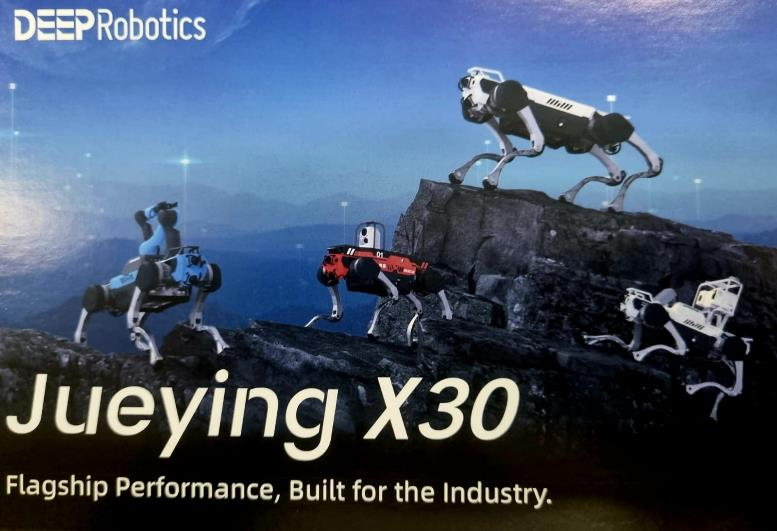
3. DEEP Robotics – Flagship performance for navigating any obstacle
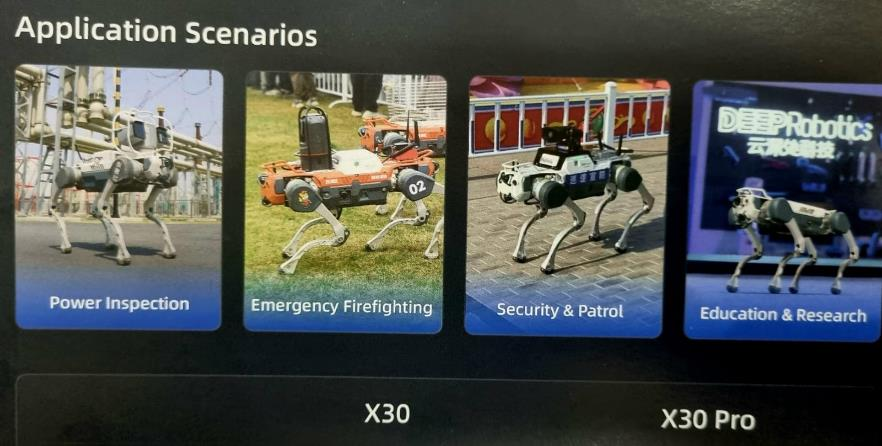
The Jueying X30 model is a quadruped—or “robodog”—capable of moving rapidly, climbing stairs, and ascending 45-degree inclines. It is well-suited for inspection, patrol, and security tasks across a wide range of challenging terrains, including rocky ground, staircases, and other areas that may be hazardous to humans.
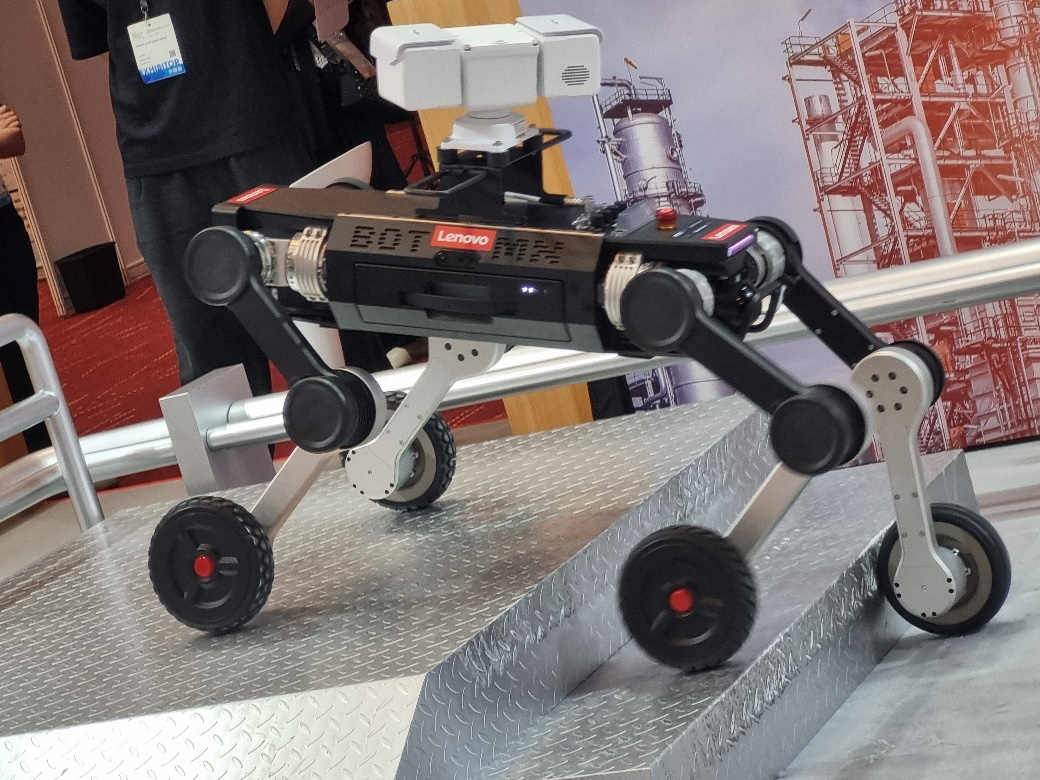
In addition to Deep Robotics, Lenovo has also developed a “robodog” for inspection and patrol purposes, as follows:
4. Lenovo Hong Kong showcased its robodog at Robopark, HK. Known for manufacturing products ranging from notebook PCs to servers, Lenovo has now also created a robodog designed for patrolling factories and power plants, as well as for checking water meters for utility companies.
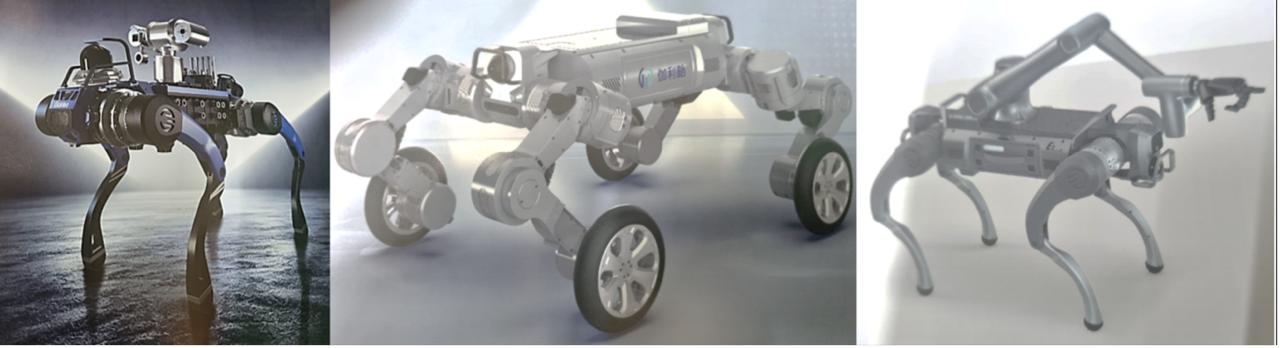
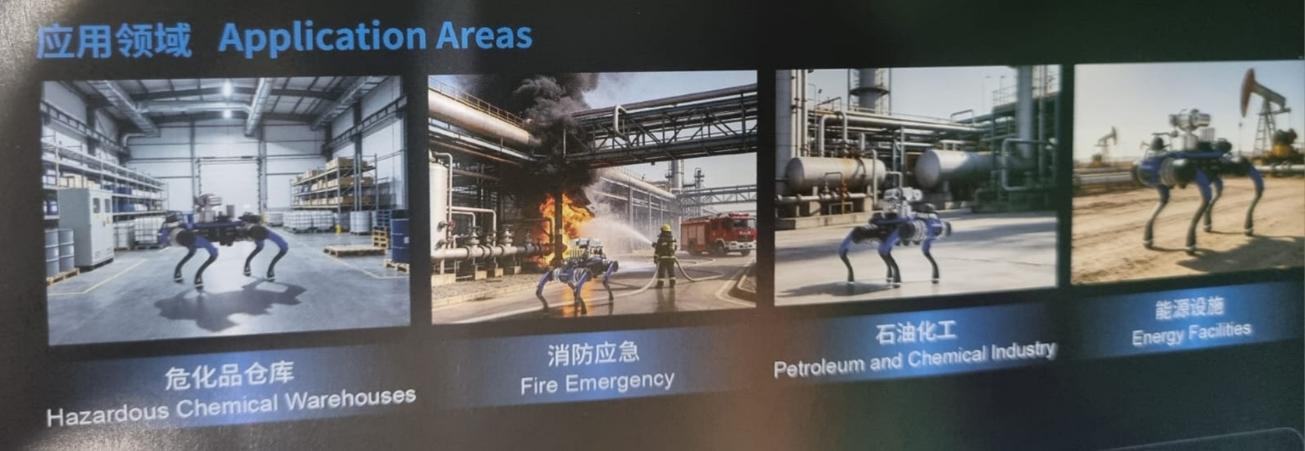
Some applications of Galileo include the following:
5. Galileo – Bionic Legged Explosion-Proof Robodog for High-Risk Missions
The intelligent quadruped (robodog) developed by Galileo (Tianjin) Technology Co. Ltd., based in Tianjin, China, comes in various versions—some featuring legs equipped with wheels, which allow the robot to climb stairs and move at high speeds across relatively flat terrain. Other versions, which lack wheels on their legs, are more affordable and capable of running across rocky or highly uneven ground.
6. XEROPTIX – Physical AI – From Understanding the World to Acting and Creating Change
Xeroptix focuses on technology, research and development (R&D), and industrial applications to advance artificial intelligence (AI)—spanning the ability to perceive and understand the real-world environment, autonomous decision-making, the execution of actions, and the creation of tangible, real-world impact. Centered on “Physical AI,” Xeroptix has developed core products that include edge AI devices, AI chips, intelligent management platforms, and algorithmic implementations. The company has also developed an AI NAS (Network-Attached Storage/System) infrastructure that integrates perception, inference, and application deployment.
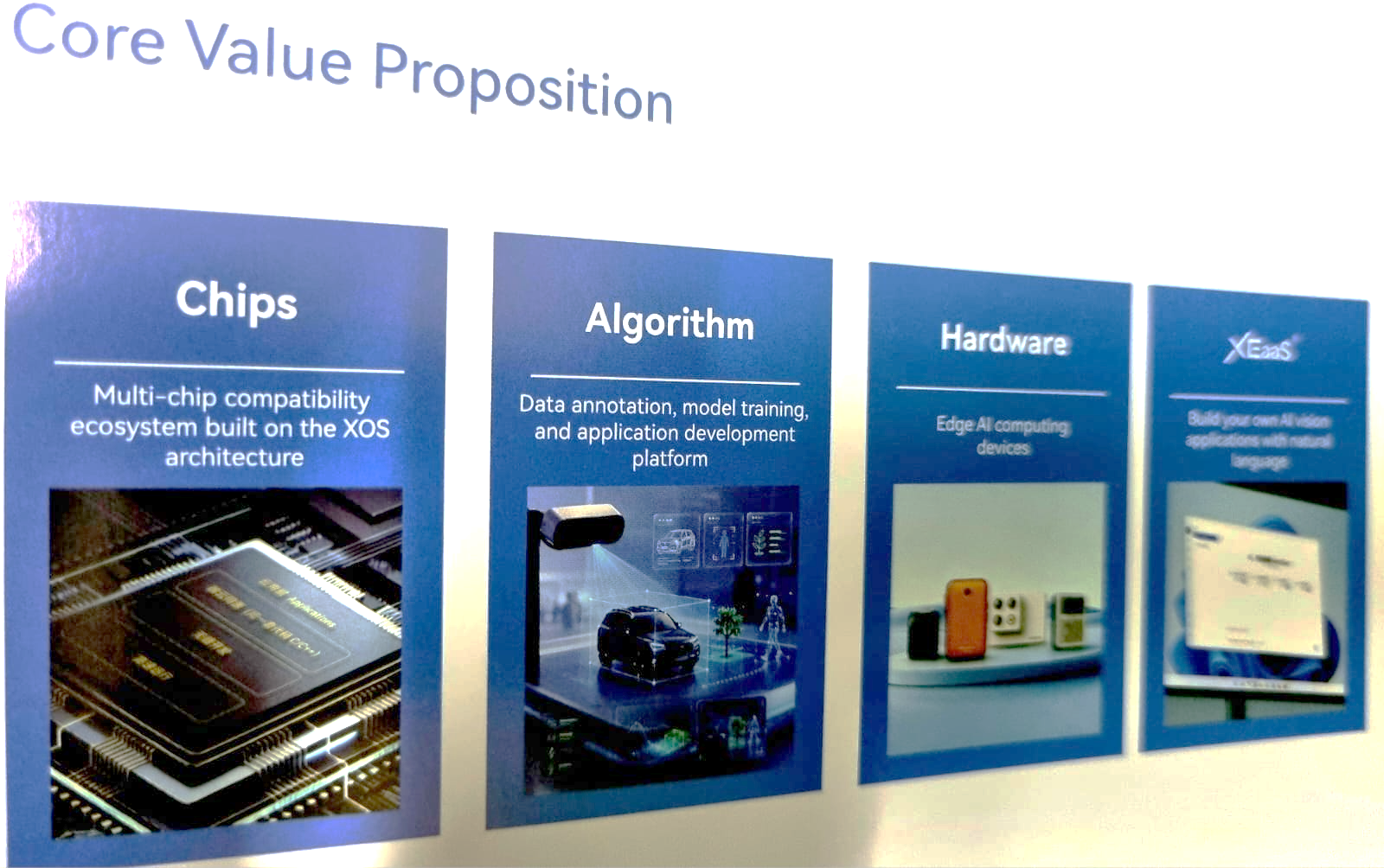
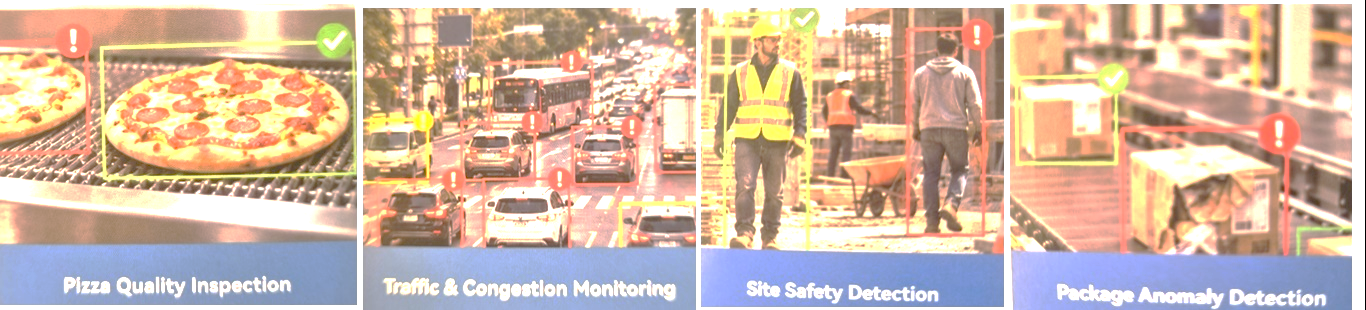
There are so many applications for AI agents and AI-based inspection that we need not worry about AI replacing jobs; instead, the emergence of numerous new AI applications and businesses will actually create a need for a “human-in-the-loop” (HITL) approach. In the near term, there is no immediate cause for concern regarding job loss due to AI—in fact, the landscape will likely expand with even more applications. However, individuals who lack AI-related skills may find themselves falling behind peers who possess them. A key area that warrants attention is “ethical AI”—ensuring that AI does not cause harm to humans, but rather serves to enhance and augment human capabilities.
- Shenzhen Allfo Technology Co.Ltd.
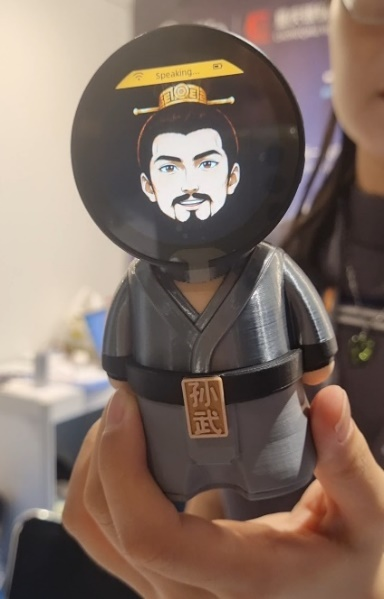
AIlfo’s mission is to make the use of LLMs (Large Language Models) and Generative AI accessible to everyone through the implementation of “AI Crews” and AI characters—such as the toy-like character named TsunZu. For instance, the TsunZu character shown in the image can interact and converse with you. TsunZu will ask for a “prompt” (an instruction)—much like how ChatGPT functions—which you can provide via voice command. TsunZu then relays that request to a cloud-based AI system (such as DeepSeek) to generate a response to your prompt.
- LINKERBOT – Dexterous Robotic Hands & Fingers for Embodied AI
At the HKEF 2026 (Autumn) exhibition, numerous companies from the AI robotics component and parts manufacturing industry showcased various joints—including those for robotic hands, arms, legs, waists, and fingers. A single robot may incorporate dozens of such joints to facilitate movement.Linkerbot specializes in developing joints for human-like robotic hands and fingers. For each digit—from the thumb and index finger down to the little finger—the ability to move relies on these joints (often implemented as motors), which define the robot’s range of motion, known as its Degrees of Freedom (DoF).
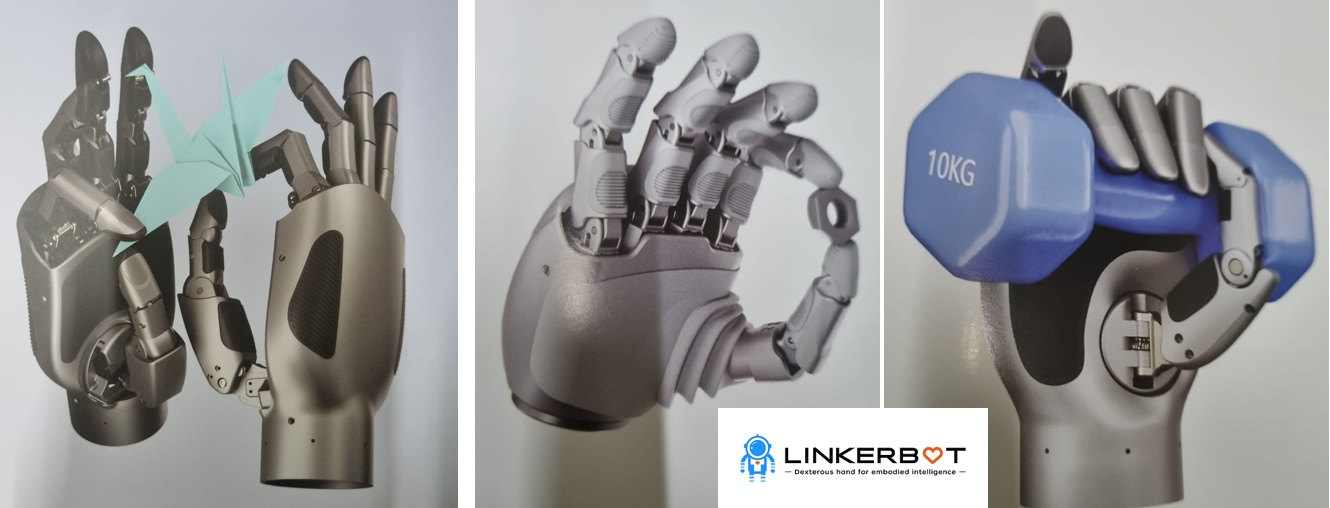
For instance, a single finger can have 2 or 3 degrees of freedom (DoF); thus, a hand with five fingers possesses 15 DoF, each driven by a motorized joint. Imagine a humanoid robot with hundreds of DoF, all controlled by a computer equipped with a GPU to enable it to stand upright and maintain its balance. Consider, too, the complex coordination required—such as in the aforementioned 15+ DoF hand—to manipulate objects like a bolt, a heavy load, or a sheet of paper.
In this field, China appears to be the world’s leading player in AI robotics—a fact demonstrated by the more than 120 robotics participants present at Robopark during HKEF 2026.
Robopark is situated adjacent to the “Future Industries Zone,” an initiative supported by the Hong Kong Productivity Council (HKPC) that promotes five key frontier or emerging technology themes. ABDI had the opportunity to visit the Quantum Computing booth within the Future Electronics section, where the HKPC is collaborating with SpinQ, a company dedicated to quantum computing research. Further details will be provided in the next article. The zone focuses on five key themes: Future Computing, Future Manufacturing, Future Marine & Quantum Technologies, Future Microelectronics, and Future Wellness.
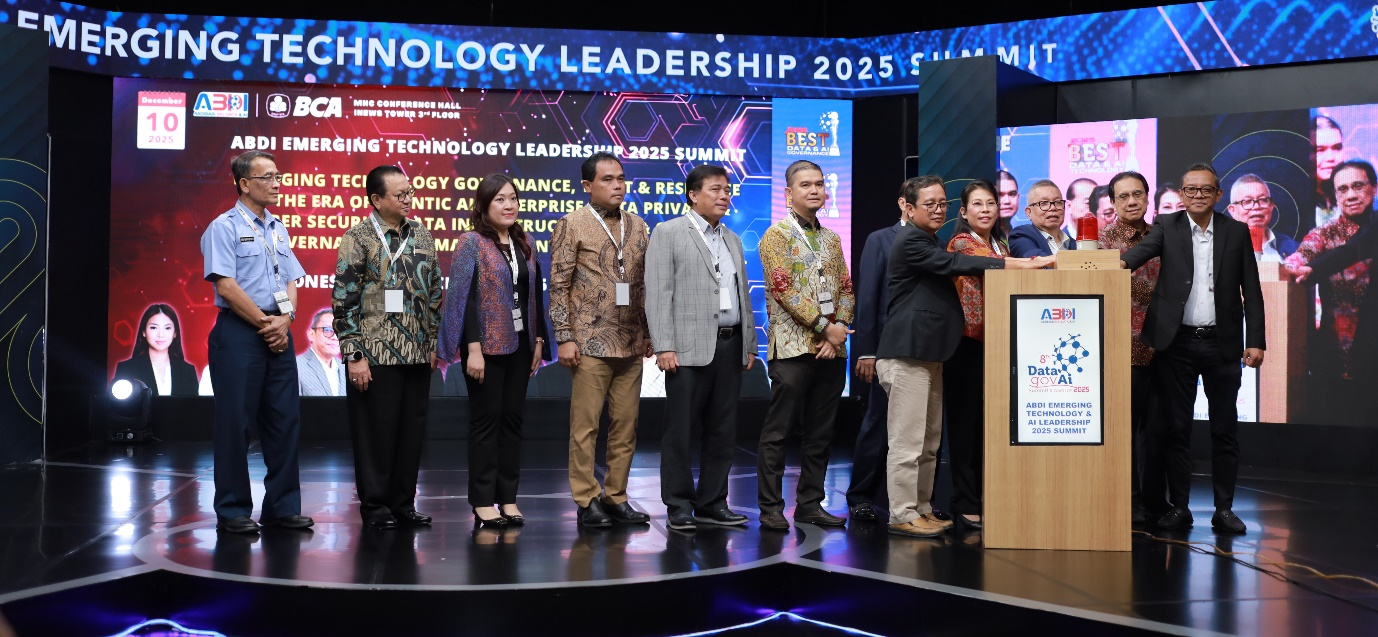
ABDI will host the DataGovAI 2026 Summit, an Awards Ceremony, and a Grand Book Launch on November 18, 2026, from 12:00 to 16:30. The event will be held in a hybrid format; you are welcome to join online via Zoom. The in-person (onsite) portion will take place at the MNC Conference Hall, iNews Tower—this is by invitation only, so please register to receive confirmation from ABDI.
Click here to register online: https://forms.gle/xFEJhLXoppWM9USb7, or contact ABDI at sekretariat@abdi.id to request an invitation for the in-person summit.
NATIONAL AI ROADMAP TASK FORCE: INDONESIA AMIDST THE US-CHINA RIVALRY.
As part of the National AI Roadmap Task Force, the “Robopark” initiative offers critical insights into the advancement of AI robotics—also known as physical AI or embedded AI—within one of the world’s most rapidly evolving AI hubs. China deploys 350,000 AI robots annually, a figure reflected by the participation of over 120 companies in Robopark. China currently supplies 50% of the global demand for AI robotics. In contrast, the US—home to companies like Boston Dynamics—deploys only 36,000 AI robots, indicating that China holds a clear lead in this sector. According to Brendan Schulman, one primary challenge is that the majority of manufacturing firms in the US are small to medium-sized—significantly smaller than the diverse range of industrial players found in China. Consequently, the cost of transitioning to robotic systems is prohibitively high, especially given that much of the US manufacturing sector has already been outsourced to China.
Developing robots in the U.S. is extremely costly, with only a handful of companies—such as Boston Dynamics and Path Robotics—capable of doing so. A key factor is that much of the robotics supply chain is concentrated in China—in hubs like Shenzhen and Shanghai—allowing small and medium-sized enterprises (SMEs) there to easily set up AI-robot manufacturing, conduct research, and handle system integration. This stands in stark contrast to the U.S., where such endeavors require massive investment and capital. Indonesia faces similar challenges; the majority of its industries currently rely on non-AI robotic arms imported from countries like Japan and, increasingly, China.
According to Heather Carroll of the U.S.-based firm Path Robotics, commercial demand from the shipbuilding industry is surging, with a 40% increase projected for 2025. Yet, 70% of the supply comes from Chinese companies, while the U.S. accounts for only 1%—leaving the origin of the remaining 30% unclear (perhaps from Taiwan, Hong Kong, or South Korea?). The U.S. is currently grappling with a severe shortage of skilled labor and is seeking ways to reshore its industrial base.
The U.S. does, however, hold a distinct advantage through NVIDIA; many Chinese AI robots rely on versions of NVIDIA’s GPUs that are permitted for export to China.
Consequently, Indonesia’s National AI Roadmap must address how the government can foster a domestic AI industry, ensuring the country does not merely remain a consumer market—especially given that even the U.S. is struggling to sustain its own industrial sector. In Hong Kong, for instance, various government institutions actively support enterprises in developing AI and robotics, while also facilitating the export of products from mainland Chinese SMEs to international markets via Hong Kong.